
How to Choose the Right Baby Cot: A Complete Guide for Australian Parents
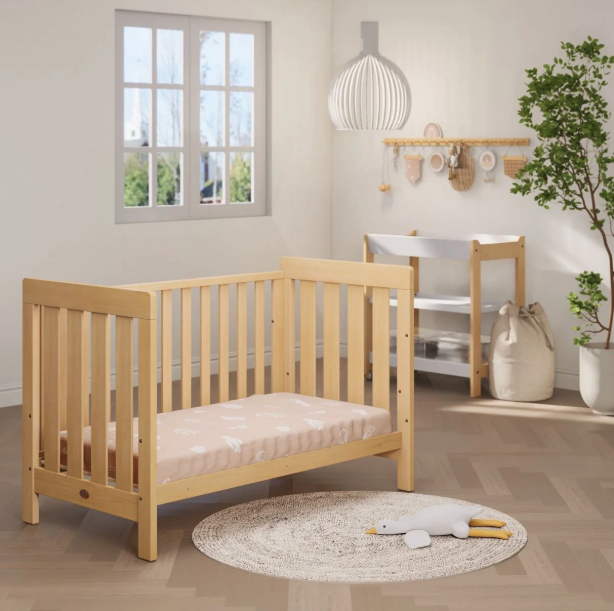
Choosing the right baby cot is the most safety-critical nursery decision Australian parents make before a new baby arrives. A cot is where a newborn will spend up to 18 hours a day sleeping, which means every specification decision, from the materials and construction to the mattress and adjustable base height, directly shapes the safety and developmental quality of those hours. This guide covers everything Australian parents need to know before buying.
What Is a Baby Cot?
A baby cot is a purpose-built infant sleep enclosure with fixed sides, a firm flat mattress base, and slat spacing designed to prevent head entrapment. Unlike bassinets, which serve only the newborn stage, a full-size cot typically serves from birth to approximately 18 months to three years depending on the child's size and developmental stage. In Australia, cots must comply with Australian Standard AS/NZS 8811.1.
What Should Australian Parents Consider Before Buying?
What are the most important things to look for in a baby cot?
Before anything else, Australian parents should confirm: AS/NZS 8811.1 compliance; firm flat mattress compatibility; slat spacing within the 95 mm maximum; non-toxic finish certifications; and a secure, stable structure with no drop-side mechanisms. After safety, consider material quality, adjustable base height positions, and whether the cot converts to a toddler or junior bed.
Australian Cot Safety Considerations
What safety standard applies to baby cots in Australia?
Australian Standard AS/NZS 8811.1 governs all infant sleep products sold in Australia. Key requirements include a maximum slat spacing of 95 mm to prevent infant head entrapment, a prohibition on drop-side mechanisms following international safety incidents, a maximum mattress-to-frame gap of 25 mm on any side, and structural load ratings appropriate for infant use. Parents should confirm explicit AS/NZS 8811.1 compliance from the retailer before purchasing any cot in the Australian market.
Red Nose Australia's safe sleep guidelines additionally recommend that babies always sleep on their back on a firm flat mattress with no loose bedding, pillows, bumpers, or toys in the cot.
Cot Dimensions and Available Nursery Space
What cot size fits a standard Australian nursery?
A standard Australian cot uses a 120 x 60 cm mattress with external frame dimensions of approximately 130 x 70 cm. A cot bed uses a larger 140 x 70 cm mattress. Before purchasing, measure the available nursery floor space and allow a minimum 60 cm clearance on the longest accessible side for safe infant lifting. Avoid positioning the cot adjacent to windows, blind cords, or heating vents.
|
Factor |
Standard Baby Cot |
Cot Bed |
Best Choice |
|
Mattress size |
120 x 60 cm |
140 x 70 cm |
Cot bed: larger sleep surface from birth |
|
Service period |
Birth to 18 months-2 years |
Birth to 4-5 years (cot + toddler bed) |
Cot bed: significantly longer |
|
Converts to toddler bed |
No |
Yes — side panel removed |
Cot bed: eliminates separate purchase |
|
Australian nursery footprint |
Smaller external frame |
Larger external frame |
Standard cot for very small AU nurseries |
|
Mattress availability |
120×60 widely available in AU |
140×70 specialist size |
Standard cot: easier AU replacement |
|
Upfront cost (AU) |
Lower |
Higher |
Standard cot: lower initial outlay |
|
Total cost across stages |
Higher (cot + toddler bed) |
Lower (single investment) |
Cot bed: better total AU value |
|
AS/NZS 8811.1 required? |
Yes |
Yes |
Both must comply in Australia |
Timber and Construction
What materials are best for an Australian baby cot?
Solid hardwood, particularly European beech, provides the highest structural density and joint strength appropriate for Australian nursery conditions including the humidity cycling of coastal Australian cities. Solid pine is an accessible alternative with adequate structural performance. Particle board or low-density MDF are not recommended for cot construction, as these materials deteriorate in joint strength faster under the dynamic loading of infant use. All timber cots should carry explicitly named non-toxic finish certifications confirming that paints, lacquers, and dyes are free from harmful substances at levels appropriate for infant mouthing contact.
Adjustable Mattress Heights
Why does adjustable base height matter in a baby cot?
Adjustable base height allows the cot to serve safely and ergonomically across the full infant development arc. At the highest position, Australian parents can lift and lower a newborn without deep bending, which is particularly important for parents recovering from caesarean birth. As the baby develops the ability to sit, then pull to standing, the base must be progressively lowered to prevent climbing and falling. Most quality cots offer two to four positions. Confirm the number of positions and the mechanism for changing base height before purchasing.
Cot vs Cot Bed
Should Australian parents choose a cot or a cot bed?
A standard cot serves the infant sleep stage from birth to approximately 18 months to two years. A cot bed serves the same period in the cot configuration and then converts to an open-sided toddler bed with the removal of one side panel, extending the frame's useful life to approximately age four to five. For Australian families who want to maximise the nursery furniture investment and avoid a separate toddler bed purchase, the cot bed provides the most practical and cost-effective service across the early childhood years.
Choosing the Right Mattress
What mattress is required for a baby cot in Australia?
The cot mattress must be firm and flat, fitting the cot with gaps of no more than 25 mm on any side under AS/NZS 8811.1. A 120 x 60 cm firm cot mattress suits a standard Australian cot. A 140 x 70 cm firm mattress suits a cot bed. Soft mattresses, pillow-top surfaces, and mattress toppers are not safe for Australian infants. The mattress should carry explicit non-toxic material certifications and, where possible, breathable construction appropriate for Australian climate conditions.
How Long Can Babies Use a Cot?
When should an Australian baby move out of the cot?
Most Australian babies are ready to move from the cot when they begin climbing out independently, when their body length reaches within 20 cm of the mattress length, or when consistent resistance to the cot at bedtime signals readiness for a larger sleep space. For most Australian children, this transition occurs between 18 months and three years. The primary signal is the child's ability to climb out, not a specific age, as this creates an immediate safety risk requiring prompt transition.
Baby Cot Buying Checklist
- Confirmed AS/NZS 8811.1 compliance with documentation available from retailer
- No drop-side mechanism
- Slat spacing no greater than 95 mm
- Mattress fit gap no more than 25 mm on all sides with the recommended mattress
- Firm flat mattress included or purchased separately in correct dimensions
- Non-toxic finish certification explicitly named on product
- Solid timber or quality engineered timber construction (not particle board)
- Minimum two adjustable base height positions
- Nursery floor space measured and confirmed adequate for the chosen cot dimensions
- No sharp edges, protrusions, or entrapment hazards on frame
Frequently Asked Questions
Can a second-hand cot be used safely in Australia?
A second-hand Australian cot can be used safely if it complies with AS/NZS 8811.1, has no drop-sides, retains all original components in good structural condition, and is used with a brand-new mattress in the correct dimensions. The original assembly instructions must be available. Do not use a second-hand mattress with any baby cot, as mattress hygiene and structural integrity cannot be reliably assessed after previous use.
Do Australian baby cots need to be anchored to the wall?
Standard floor-level Australian baby cots do not require wall anchoring. However, any tall furniture adjacent to the cot, including dressers, wardrobes, and bookshelves, should be wall-anchored to prevent tip-over during the active climbing stage of toddler development.
Can a cot be placed next to a window in an Australian nursery?
No. Cots should not be placed adjacent to windows due to draught exposure, direct sunlight creating temperature hazards, and the strangulation risk from blind and curtain cords. The ACCC advises that all cord window coverings be replaced with cordless alternatives in rooms used by children under seven years of age in Australia.
What is the difference between a portable cot and a standard cot in Australia?
A portable or travel cot is a lightweight collapsible sleep product designed for temporary use. It is not a substitute for a full-size Australian baby cot for regular overnight sleep, as portable cots typically have softer mattress bases that do not meet the same safety standard as fixed cots under AS/NZS 8811.1. A standard Australian baby cot is the appropriate primary sleep surface for overnight and daytime infant sleep.
Final Thoughts
The right baby cot for an Australian family combines confirmed AS/NZS 8811.1 compliance, solid timber construction, a correct-fitting firm flat mattress, and the adjustable base height positions that serve the full infant developmental arc safely. Australian families who approach this purchase with the safety checklist above and the willingness to prioritise quality construction over price alone will find the cot investment serves the infant and toddler years reliably without premature replacement. Families looking for Australian cot options can compare designs from specialist children's furniture brands at boori.com.au/collections/cot