
Gilroy Font Guide for Modern Design Projects
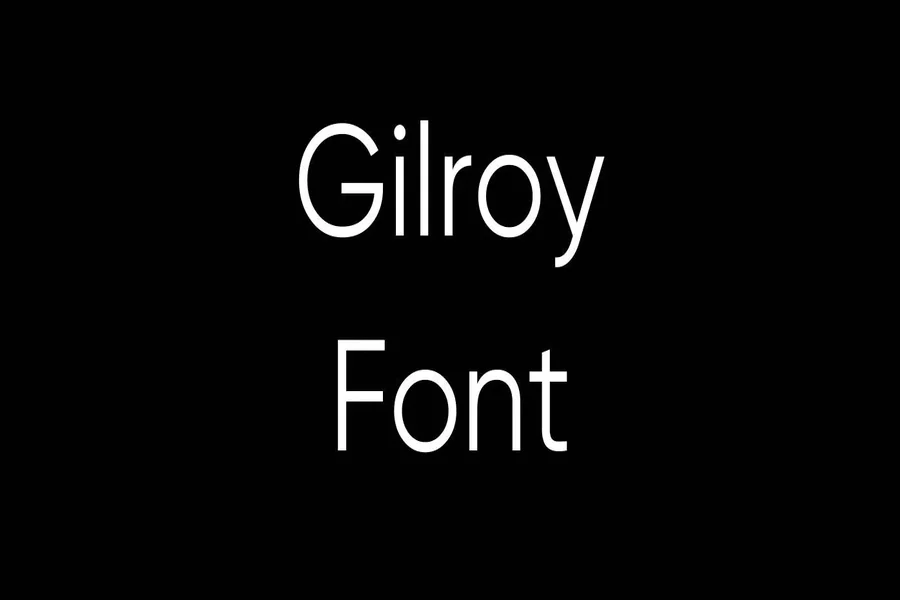
Gilroy font has become one of the most recognizable modern typefaces in digital and print design. Probably, in the past few years, while going through branding projects, web layouts or social media graphics, somewhere you have witnessed this clean and confident typeface at work. This is provided with a friendly but professional sound due to its smooth curves and balanced geometry that cut across industries.
The thing is that designers like its versatility. It may appear bold and powerful in headlines as well as being readable and elegant in the body text. Because of this flexibility, Gilroy font has found its place in everything from tech startups to fashion campaigns. Here, you will be able to discover what makes it special and where it is most applicable and how you can apply it effectively to your own projects.
The Story Behind Gilroy Font
Gilroy font was designed by Radomir Tinkov, a type designer known for creating contemporary sans serif families with strong personality. Gilroy can be called a contemporary geometric non-serif, with the influence of the well-known design classics such as Futura but updated to suit modern requirements of the design.
The typeface has been designed to give a full polished family. It has several weights, including thin and light, bold and black with corresponding italics. This broad coverage enables the designers to create hierarchy without changing to a different typeface.
Unlike many geometric fonts that feel rigid, Gilroy font softens its structure with rounded details. The typography is friendly. The lower case a and g are well constructed, and the space is well calculated to help improve the screen readability.
It became popular with time by coming across creative marketplaces and design communities. It has a good visual identity and usability which contributed to its spread among the graphic designers and brand strategists.
Key Features That Make It Stand Out
One reason Gilroy font is so widely used is its thoughtful construction. It is a mixture of geometrical accuracy and human decorescent touches.
To begin with, the figures are real and symmetrical. Circles are almost flawless and vertical lines are stable. This provides the font with a contemporary and organized appearance. Meanwhile, the lines are not rough and this makes it not feel cold and mechanical.
Second, the font family is very broad. It has approximately 20 weights and styles. That is to say that you can design all manner of subtle captions to the very dense display headlines with the same type system. This coherence can be useful in the branding where visual identity is important.
Third, it has a solid cross-platform readability. The characters are legible even when small on websites, applications and on digital advertisements. Space and proportions are screen-friendly which is necessary in the digital-first world.
Multilingual assistance in numerous versions is another advantage. This is convenient to global brands that require a uniform typography in all the markets.
Where Gilroy Font Works Best
Gilroy font shines in branding and identity design. Its contemporary look renders it perfect among companies that desire to portray creativity and transparency. It is popular with tech startups as a logo and marketing text, as it is not too experimental but feels progressive.
Fashion and lifestyle branding also have it. The graphic weights are used to produce bold headlines on posters and packaging, and the light weights are used to be graceful in the lookbooks and websites.
For web design, Gilroy font is a strong option for hero sections, navigation menus, and call-to-action buttons. Layouts are clean and well organized due to its geometrical structure. Combined with an abundance of white space, it forms a minimal but effective design.
It works well in magazines, brochures and in corporate reports in print. The variety of weight enables the designers to create explicit typographic hierarchies. Cohesion can be achieved without the use of several typefaces to headings, subheadings and body text.
Nevertheless, it might not be the most appropriate with very traditional or historical themes. A serif typeface could better convey the tone in case you are designing a classic law firm or a project that happens to be vintage.
Read More: Verdana Font – A Clear Choice for Screen Design
How to Pair Gilroy Font with Other Typefaces
The combination of typefaces can take a design to a new level, provided it is done well. Gilroy font pairs well with serif fonts that bring contrast and warmth. To serve as an example, its integration with the classic serif in editorial layouts could help to create the contrast between modernity and the classical elegance.
The most popular solution is to have Gilroy as the headings and readable serif as body. This makes it attractive and still professional in design. Gilroy geometric forms contrast with the natural curves of most of the serif fonts.
It also is compatible with script fonts in small proportions. When branding a project you may want to consider Gilroy as the primary text of the logo and put in a light handwritten script as a tagline. This makes personality without compromising clarity.
In pairing, weight contrast is important to observe. In the event that you use a bold version of Gilroy in the headlines, use a lighter or normal weight in the supporting text. One should not combine too many heavy styles simultaneously as it is likely to create a crowded design.
Consistency is key. It is best to use one or two complementary typefaces and stick to them throughout your materials.
Tips for Using Gilroy Font Effectively
To get the most out of Gilroy font, start by defining your design goal. Do you want to be bold and energetic, or minimal and quiet? The extensive variety of weights enables tuning the tone without altering the font family.
In the case of headlines, the bold or extra bold weight is very impactful. These suit posters, banners and landing page headers. Regular or medium weights of body text are comfortable and readable.
Spacing also matters. Gilroy font often looks best with slightly generous line spacing, especially in digital layouts. This increases the clarity and lets the design have air.
In logo creation, take into account customisation of some letterforms to make them unique. Minor changes in the spacing/or minor modifications will make any average typeface look like a unique brand mark.
A test on the font using various devices and printing samples should always be done. What might be beautiful on a big desktop screen will be different on a phone. Having your design reviewed in context keeps your design consistent.
Lastly, do not use it too often because it is in fashion. While Gilroy font is versatile, thoughtful application will make your design stand out more than following trends alone.
Final Thought
Gilroy font has earned its place in modern design because it balances structure and friendliness. Its geometrical base makes it strong and the smooth curves make it friendly. It is easy to adapt to branding, web, and print projects with a large selection of weights and high level of readability.
The trick of using it effectively is through purpose. Select the appropriate weight of your message, combine it considerately with other typefaces and ensure clarity of hierarchy. When applied carefully, Gilroy font can help create designs that feel both contemporary and timeless.
FAQs
What type of font is Gilroy font?
Gilroy font is a modern geometric sans serif typeface designed with clean shapes and multiple weights for versatile use.
Is Gilroy font suitable for logos?
Yes, Gilroy font works very well for logos because of its balanced structure and wide range of weights that allow strong visual identity.
Can Gilroy font be used for body text?
Gilroy font can be used for body text, especially in its regular or medium weights, as it maintains good readability on screens and in print.
Is Gilroy font free to use?
Gilroy font is typically a commercial typeface, and you may need to purchase a license depending on how you plan to use it.
What fonts pair well with Gilroy font?
Gilroy font pairs well with classic serif fonts for contrast and can also complement subtle script fonts in branding projects.