
A Practical Fiber Operations Stack for Mapping, Construction, Billing, and Broadband Growth
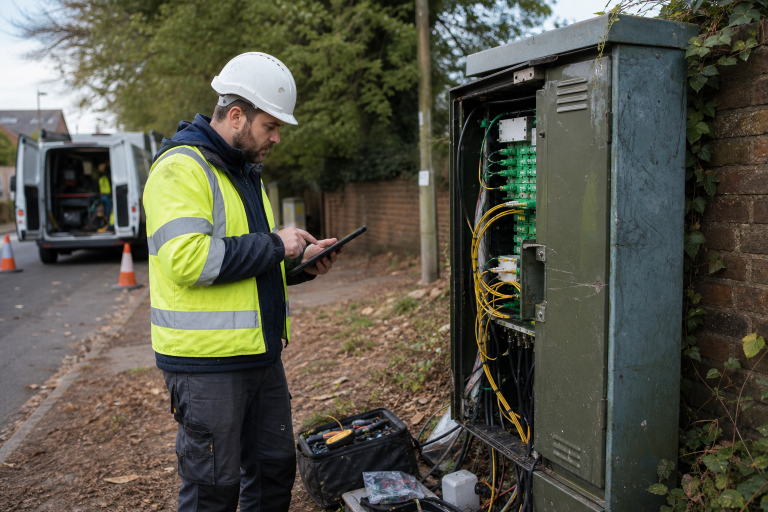
Fiber operators, municipal broadband teams, engineering firms, and ISPs need more than a map to scale reliably. They need connected location intelligence, network records, construction execution, physical materials, customer activation, and billing workflows that all reflect the same reality in the field.
Why Broadband Operations Need a Connected Technology Stack
Disconnected CAD files, spreadsheets, outdated as-builts, and siloed work orders create expensive handoffs. A practical operating model follows the network from opportunity analysis and design through construction, inventory, service qualification, activation, maintenance, and customer support. The stakes are high: the federal BEAD program represents $42.45 billion for high-speed internet planning, deployment, and adoption across the United States. This roundup is not a ranking. Each company fills a complementary role, and the goal is to help operators build a dependable ecosystem rather than collect disconnected tools.
VETRO
VETRO FiberMap is the fiber-specific system of record at the center of this ecosystem. Its cloud-based, GIS-powered platform helps operators plan routes, document outside plant assets, trace strand-level connectivity, manage capacity, assess serviceability, and preserve accurate operational records as the network changes. Teams that need one trusted view of routes, cables, splice points, ports, and serviceable addresses can explore network inventory management software designed for modern fiber operators. For a broader view of the platform's fiber mapping, design, and operational capabilities, visit Vetro FiberMap.
Why It's On the List
- VETRO provides the operational foundation that gives adjacent planning, construction, and billing systems a dependable network context.
- In a Kit Carson Internet case study, the operator managed more than 2,900 miles of main-line fiber, over 500 miles of drop fiber, and more than 7,300 customers. VETRO helped reduce time spent on estimates, troubleshooting, transfers, and training by about half.
- TTConnect reported reducing planning for a 42-kilometer build from one month to 10 days, cutting build-planning time by 50%, while maintaining roughly 5,500 circuits and adding close to 100 circuits daily.
- Mobile access, splice documentation, connectivity tracing, address intelligence, APIs, and integrations support a continuous flow of accurate data from field crews to operations and customer teams.
CostQuest Associates
CostQuest Associates supplies the location intelligence and cost-modeling layer that helps an operator decide where to build before detailed engineering begins. Its Broadband Fabric data covers more than 115 million verified broadband serviceable locations and is used by more than 3,000 organizations for planning, funding, and deployment decisions.
Why It's On the List
- CostQuest supports address-level opportunity screening, service availability analysis, take-rate modeling, and cost-to-serve estimates.
- A rural ISP can compare several proposed service areas, identify eligible locations, then send the selected opportunity into VETRO for fiber design and long-term asset documentation.
- The FCC's Location Fabric is a standardized list of locations where fixed broadband can be installed, making it especially relevant to coverage reporting and grant work.
Esri
Esri provides enterprise GIS capabilities for operators and municipalities that need fiber data overlaid with parcels, roads, rights-of-way, utility assets, demographics, hazards, and public works records. Its telecom tools support planning, funding applications, reporting, documentation, field operations, and OSS/BSS data sharing.
Why It's On the List
- Esri contributes a broad geographic context, while VETRO provides purpose-built fiber connectivity and inventory workflows.
- For municipal broadband, this combination can help planners coordinate routes with transportation, emergency services, utility corridors, and permitting requirements.
- Esri notes that GIS can help telecommunications teams qualify prospects, fulfill service, manage network operations, and maintain a digital twin across the customer journey.
Render Networks
Render Networks is the construction execution layer. It helps infrastructure teams turn designs into field-ready work packages, coordinate contractors, validate completed work, and maintain visibility across construction and handoff processes.
Why It's On the List
- Render supports the link between planned network data and verified construction activity, rather than replacing a fiber inventory system of record.
- Its platform has supported broadband delivery to more than 800,000 locations, with some customers reporting delivery timeline reductions of up to 50% through GPS, mobile workflows, and automation.
- A contractor can submit completed route details, splice locations, photos, and inspection results so approved as-builts can return to VETRO.
Corning
Corning represents the physical infrastructure layer: fiber, cable, connectivity, closures, and related optical communications products. Software can document a network, but reliable service still depends on the installed materials and the ability to identify exactly what is in the ground, on poles, and inside cabinets.
Why It's On the List
- Accurate VETRO records help operators identify installed cable types, equipment, and splice locations before repairs or expansions, reducing unnecessary material purchases.
- In April 2026, Corning reported that BEAD-related orders were already being fulfilled for smaller providers and described the market shift from planning toward procurement and deployment.
- Corning also states that its fiber, cable, and preform manufacturing occurs in the United States for its self-certified BABA and BEAD-compliant products.
Sonar Software
Sonar Software serves as the business operations layer for ISP billing, customer management, provisioning, payments, scheduling, ticketing, and field workflows. Its value increases when sales and support teams receive accurate serviceability and network details rather than relying on manual lookups.
Why It's On the List
- VETRO can establish whether an address is serviceable and what infrastructure is available; Sonar can help turn that verified opportunity into an order, account, activation, and ongoing billing relationship.
- This connection reduces duplicate entry between engineering, sales, provisioning, billing, and support teams.
- A customer journey can move from serviceability check to order acceptance, provisioning, installation, payment, and later troubleshooting with fewer data gaps.
How to Choose a Fiber Operations Stack
The companies above were selected based on their distinct roles in the fiber lifecycle, their ability to support connected workflows, documented relevance to broadband, measurable deployment outcomes where available, and practical fit with planning, field, and customer operations. Start with the system of record, then evaluate integration depth, mobile usability, migration support, scalability, data governance, and accountability for as-built changes.
- Define success metrics: Track data accuracy, build cycle time, rework, serviceability response time, truck rolls, and time to activate.
- Test field adoption: Confirm technicians can view current data, add photos, complete work, and submit corrections from mobile devices.
- Audit integrations: Ask for APIs, exports, webhooks, documented data models, and proven OSS, BSS, CRM, and billing connections.
Final Takeaway: Reliable Broadband Starts With Reliable Network Data
No single business delivers every component of a fiber operator's stack. The strongest model connects location intelligence from CostQuest Associates, enterprise GIS from Esri, construction execution from Render Networks, physical infrastructure from Corning, and customer operations from Sonar Software. VETRO belongs at the center because accurate network inventory, connectivity, mapping, and serviceability data give every other function a better foundation for action. When every team works from a trusted network record, operators can grow with greater control, fewer delays, and a clearer path from design to connected customer.