
NVIDIA’s DLSS 5 debut in NBA 2K27 puts neural rendering at the centre of September gaming
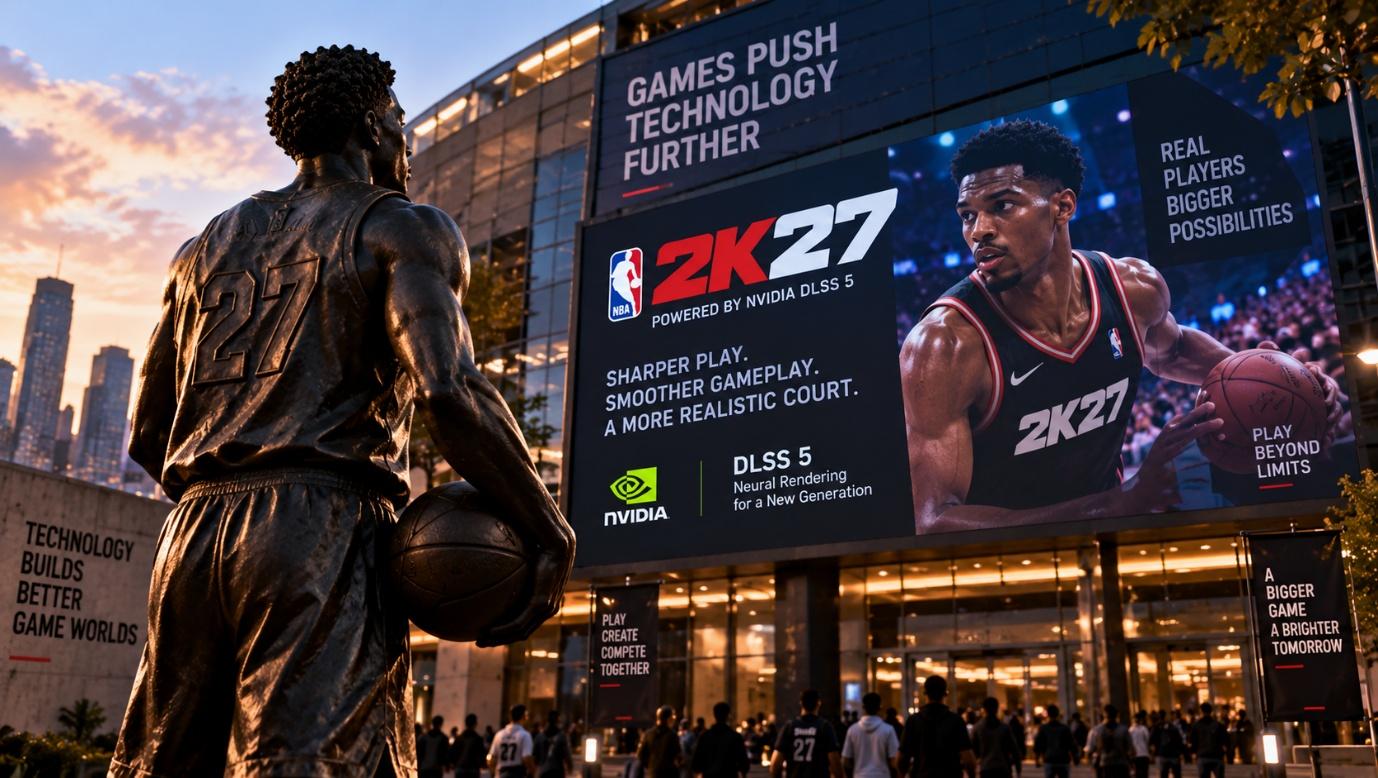
September has opened with a useful glimpse of where PC gaming graphics may be heading next. NVIDIA has launched DLSS 5 in NBA 2K27, making a mainstream sports title the first showcase for its new 3D-Guided Neural Rendering system. The timing is significant: the technology arrives just as the autumn release calendar accelerates, giving players and developers an early look at how AI could influence not only performance but the visual presentation of games themselves.
DLSS 5 moves from performance tool to visual system
Earlier generations of DLSS were best known for reconstructing images, generating additional frames and cleaning up ray-traced lighting. DLSS 5 takes a different step by using the game engine’s own rendered frame as the foundation for a neural model that adds lighting and material detail while preserving the geometry and composition created by the developers.
According to NVIDIA’s official overview of the DLSS 5 launch in NBA 2K27, the feature became available on September 3 for GeForce RTX 50 Series desktop and laptop GPUs and through GeForce NOW in supported NVIDIA-operated regions. The company says the system is designed to remain temporally stable from frame to frame while giving developers control over how strongly the neural rendering affects different parts of a scene.
A basketball game is a demanding first test
Using NBA 2K27 as the debut title makes sense because sports games quickly expose visual inconsistencies. Players see familiar arenas, broadcast-style camera angles, close-ups of faces, hair, skin, uniforms and reflective court surfaces. If a rendering system changes those elements unpredictably, the result is immediately noticeable.
Visual Concepts is using the technology to improve how light interacts with skin, hair and materials while retaining the scanned facial geometry of real athletes. That emphasis matters because neural graphics will only be useful in games if artists remain in control of the final look rather than handing visual decisions entirely to an automated model.
The wider trend is therefore less about making every game photorealistic and more about adding another layer to the rendering pipeline. Artistic direction, performance targets and the type of game will still determine whether a neural effect is appropriate.
NBA 2K27 arrives as September’s release calendar accelerates
The technology launch also lands alongside the worldwide release of NBA 2K27 on September 4. 2K’s official NBA 2K27 release information confirms versions for PlayStation 5, Xbox Series X|S, PC through Steam and Nintendo Switch 2, placing the game across several of the biggest current gaming platforms.
That broad release gives NVIDIA an unusually visible title for the first public deployment of DLSS 5. Instead of appearing first in a niche technology demo, neural rendering is entering the market through a franchise built around recognisable athletes, competitive modes and a presentation style intended to resemble a live sports broadcast.
Access to games is becoming as important as the rendering technology
The other part of the September story is distribution. NVIDIA is also offering NBA 2K27 with DLSS 5 through GeForce NOW Ultimate, meaning some players can use cloud hardware rather than relying on a local RTX 50 Series system. In that model, the demanding rendering work is performed remotely, and the resulting game stream is delivered to the user’s device.
The trend toward immediate online access extends well beyond cloud-streamed PC games. Browser-based products operate with an even lighter local footprint, including gambling titles such as plinko online that are accessed through a web platform rather than installed like a conventional game. The categories are very different, and gambling access remains subject to local law and age restrictions, but the technical comparison is useful: more interactive entertainment is being delivered without requiring the user’s own device to handle the full software workload.
For developers and platform owners, that shift makes connection quality, latency, interface design and account systems increasingly important parts of the overall experience. Graphics hardware still matters, but it is no longer always sitting under the player’s desk.
Autumn will show whether neural rendering moves beyond a showcase
NVIDIA says further DLSS 5 optimisations are planned for the fall and that more game integrations will be announced in the coming weeks and months. That makes NBA 2K27 a starting point rather than a complete picture of how the technology will be used.
The next test will be a variety. A sports game provides faces, fabric, polished floors and controlled arena lighting, but other genres create very different problems. Open worlds, horror games, racing titles and stylised projects may use neural rendering in ways that have little in common with a basketball broadcast.
For players, September’s launch is therefore less important as a single graphics toggle than as evidence of a broader change. AI-assisted rendering is shifting from background reconstruction to the final visual character of a game, while cloud delivery is expanding access to hardware-intensive features. If developers can preserve artistic control and consistent performance, neural graphics could become one of the defining PC gaming trends of the autumn release season.