
Achieve Mirror-Smooth Finishes With Precision CNC Grinding Services
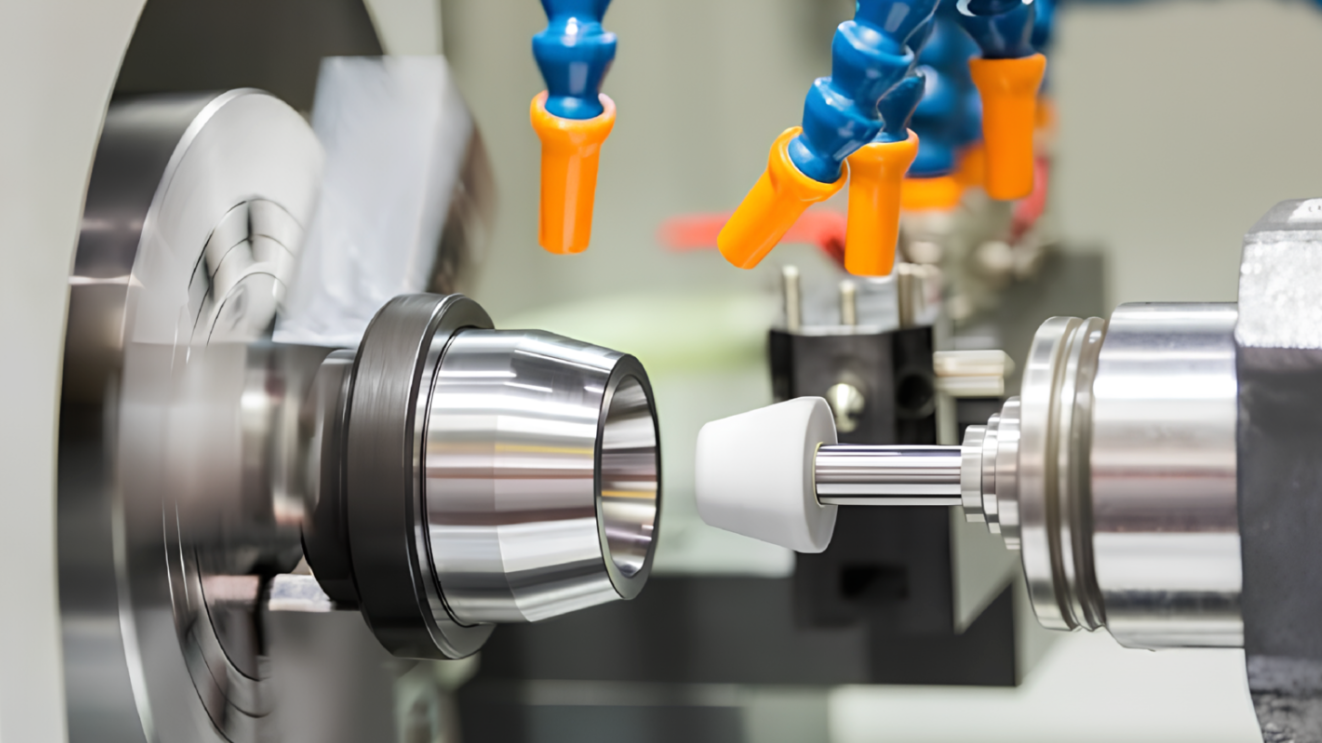
When a flawless machined surface is desired, sometimes more than conventional milling or turning is required. Precision grinding fills that gap, providing the most precise control of geometry, dimensions, and surface quality. It provides a small amount of material removal within stringent tolerances of critical parts. The process is suitable for applications where accuracy, roundness, flatness, and surface integrity are critical, such as precision shafts, hardened tooling, etc. With modern equipment that is controlled by a computer, grinding can be a reliable finishing process for intricate production needs and close dimensional tolerances.
1. Why Precision Grinding Defines the Final Surface
Grinding is not a traditional stock removal process, but is essentially a finishing process. An abrasive wheel is used to remove small quantities of material from a previously cut part. This controlled action can not only eliminate small dimensional variations, but it can also create a very fine surface.
Abrasive grains are different from conventional cutting tools because there are many cutting points of contact with the workpiece. This makes grinding especially useful if the final part needs to be extremely dimensionally uniform. Precision grinding can reach a surface roughness of Ra 0.2 μm, and precision grinding surface roughness can be Ra 0.4 to Ra 1.6 μm.
The outcome is more than just a smoother look. A good ground surface can enhance the conditions of contact, dimensional stability, sealing performance, and component compatibility.
2. Turning Tight Dimensions Into Controlled Geometry
Some parts require dimensional control that can’t easily be achieved with conventional machining methods. Grinding is a controlled finishing operation used for finishing critical features after turning, milling, or heat treatment.
When the right materials, machine, tooling, and process conditions are used, tolerances as fine as ±0.005 mm (±0.0002 inch) can be achieved with advanced CNC grinding equipment. This precision is especially critical for interfaces, bearing surfaces, precision bores, and mating of components that are mechanically loaded.
Grinding can also correct for other geometric properties other than dimensions. For certain operations, manufacturers can control flatness, roundness, concentricity, and surface consistency. These properties frequently mean the difference between a precision assembly running smoothly or wearing out prematurely.
3. Choosing the Right Grinding Method for the Feature
There are different grinding strategies for different geometries. The choice of the right method can be made to optimise the dimensional precision, surface quality, efficiency of production, and accessibility of the workpieces.
Surface Grinding
Surface grinding is the grinding of a flat surface of the workpiece by an abrasive wheel. It can be used to make accurate planes and to obtain a fine finish on plates, inserts, guide parts and machine bases.
Cylindrical Grinding
Cylindrical grinding is used for external or internal round surfaces in which the workpiece and the grinding wheel are both rotating. Ideal for shafts, rods, journals, and other rotationally symmetrical parts.
Centerless Grinding
In the centerless grinding process, the workpiece is not supported on a central spindle, but between a grinding wheel and a regulating wheel. This way, suitable round components can be efficiently and repeatably processed, especially in large production volumes.
4. Where CNC Grinding Services Add the Most Value
When a component requires a surface finish and extremely accurate dimensions, CNC grinding services are particularly beneficial. Grinding parameters and tool paths can be kept uniform on precision parts with computer-controlled movement.
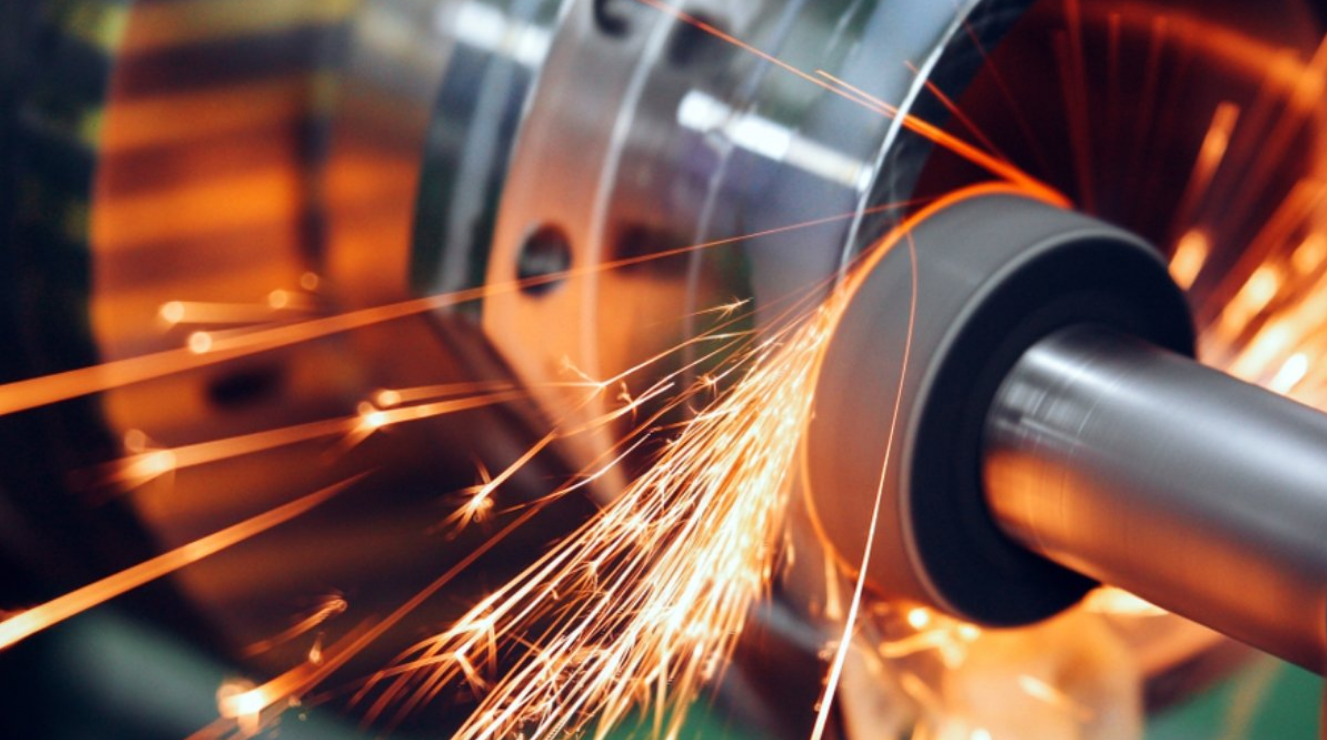
The process has the benefit of post-machining refinement and demanding OD or ID applications. Internal grinding can be used to polish bores, and external grinding can be used to polish shafts and cylindrical surfaces. This versatility makes grinding an appropriate process for components where extremely close mating relationships are needed.
Typical applications include:
- Precision shafts and bearing journals
- Bushings, sleeves, and hydraulic components
- Tool holders and cutting tools
- Mold plates, die inserts, and guide pins
- Transmission, gear, crankshaft, and camshaft components
- Aerospace, medical, robotic, and automation parts
5. Matching Abrasive Processes With Challenging Materials
The choice of material significantly affects the grinding performance. The effects of abrasive cutting, heat generation, and wheel selection vary with different metals and engineering materials.
After heat treatment, the hardness of steel and alloy steel often makes it difficult to cut using traditional methods, so grinding is often used. Some process control is necessary to ensure surface quality and dimensional accuracy of stainless steels.
Precision grinding can also be applied to other high-performance materials such as titanium, nickel-based alloys, and cobalt alloys. Thermal management is especially critical due to their strength and heat resistance.
Another special requirement is for ultra-hard materials. Advanced abrasive technologies, such as CBN or diamond wheels, may be needed to achieve efficient material removal and surface integrity for tungsten carbide, cemented carbide, and hardened tool materials.
6. Controlling Heat, Surface Integrity, and Accuracy
Precision grinding is not just a matter of rolling an abrasive wheel over a part. The outcome can be affected by feed rate, material of the workpiece, wheel condition, coolant strategy, and heat.
There can be excessive grinding heat leading to surface integrity or dimensional stability issues, especially with hardened materials. These risks can be minimised by using the correct wheel and controlling process parameters.
The inspection is also an important part of precision finishing. Surface roughness can be measured with a profilometer, and critical dimensions and geometry with a coordinate measuring machine. These tests are used to determine if the manufactured product meets its engineering specifications.
7. Designing Parts for a More Predictable Grinding Process
The good results start even before the component gets to the grinding machine. Drawings must clearly specify dimensions, tolerances, surface finishes, datum relationships, and features that need special attention.
The type of support for the workpiece should also be considered in the design of the grinding tool. Specialized fixturing may be required for complex geometries, and deflection/stability may be an issue with slender components.
By avoiding unnecessary finishing requirements, clear specifications reduce the complexity of manufacturing. An effective strategy is to limit the tightest tolerances and finest finishes to those surfaces that truly need them.
8. From Machined Blank to Mirror-Level Finish
Precision grinding is most effective when used as an integrated process in a manufacturing sequence. A part can be turned or milled to create the basic shape of the part. Heat treatment can then add needed mechanical properties prior to grinding, which brings critical dimensions and surfaces to their final state.
In this sequence, each manufacturing process is able to complete the task that it does best. Grinding is an efficient process of rough machining that removes a significant amount of material, followed by controlled refinement during the finishing stage.
In the case of manufacturers who want this blend of high-speed production capacity and precise finishing, 3ERP offers grinding and other manufacturing services, which are ISO 9001:2015 certified.
Conclusion
Mirror-smooth finishes rely on controlled material removal, accurate machine motion, appropriate abrasives, and disciplined inspection. Precision CNC grinding can be used to produce flat surfaces, cylindrical features, internal bores, and even demanding production parts to extremely close tolerances.
It has more than just a cosmetic benefit. Correct grinding can help ensure good mating, smooth motion, surface characteristics, and dependable component operation. The selection of the grinding method and establishment of the right tolerances will allow the manufacturers to transform conventional machined parts into extremely refined precision parts.