
How to Choose the Right Cot for Your Baby: A Complete Guide for British Parents
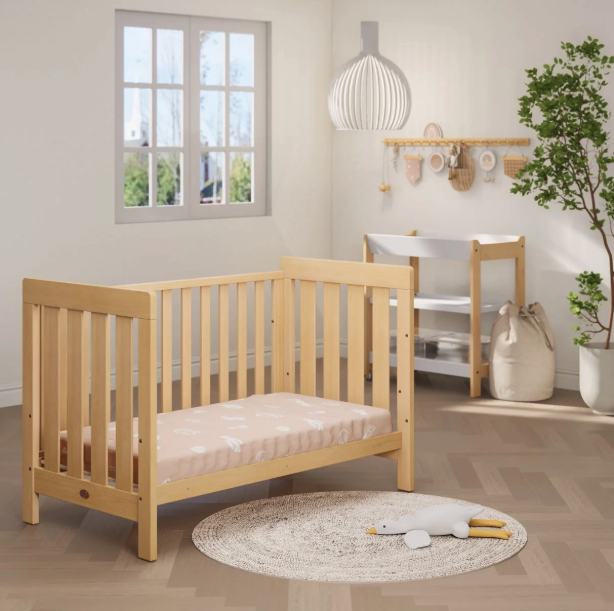
Choosing the right cot is the most safety-critical nursery decision British parents make before a new baby arrives. A cot is where a newborn spends up to 18 hours a day sleeping, making every specification decision — from construction materials and slat spacing to mattress fit and base height adjustment — directly relevant to the safety and developmental quality of those hours. This guide covers everything British parents need to know before buying, with reference to the UK safety standards that govern infant sleep products in the British market.
What Is a Baby Cot?
What defines a baby cot in the UK?
A baby cot is a purpose-built infant sleep enclosure with fixed sides, a firm flat mattress base, and slat spacing designed to prevent head entrapment. In the UK, cots are governed by British Standard BS EN 716, which covers structural safety, slat spacing, drop-side restrictions, and mattress fit requirements for infant sleep products sold in the British market. A standard UK cot uses a 120 x 60 cm mattress and serves from birth to approximately 18 months to three years. A cot bed uses a larger 140 x 70 cm mattress and converts to a toddler bed, extending the frame's service to approximately age four to five.
UK Cot Safety Standards
What safety standard applies to cots sold in the UK?
British Standard BS EN 716 is the mandatory safety standard governing infant sleep products sold in the UK. Key requirements include a maximum slat spacing of 65 mm to prevent infant head entrapment, a prohibition on drop-side mechanisms following safety incidents in the international market, a maximum mattress-to-frame gap of 25 mm on any side, structural load ratings appropriate for infant use, and an absence of protrusions or entrapment hazards on the frame. All cots sold by UK retailers must comply with BS EN 716. British parents should ask for explicit compliance confirmation from the retailer before purchasing any cot in the UK market.
|
BS EN 716 Requirement |
Specification |
Why It Matters for British Babies |
|
Slat spacing |
Maximum 65 mm between slats |
Prevents infant head entrapment in UK cots |
|
Drop-side prohibition |
No drop-side mechanisms permitted in UK |
Drop-sides associated with infant fatalities internationally |
|
Mattress gap |
Maximum 25 mm on all sides |
Prevents infant entrapment at mattress edges in British cots |
|
Structural load rating |
Documented for infant use |
Prevents structural failure under British infant loading |
|
No entrapment hazards |
No protrusions or clothing-catch points |
Prevents British infant injury during use |
What British Parents Should Consider Before Buying
What are the most important considerations for UK parents buying a cot?
Beyond BS EN 716 compliance, British parents should assess: the nursery floor space available for the chosen cot footprint, with a minimum 60 cm clearance on the longest accessible side for safe infant lifting; the construction material and its suitability for British indoor humidity conditions across seasonal variation; the number and mechanism of adjustable base height positions; whether the cot converts to a toddler bed to extend the investment; and the non-toxic finish certifications confirming the safety of all surfaces a British infant will contact and mouth across the cot use years.
Cot Dimensions and UK Nursery Space
What cot size fits a standard British nursery?
A standard UK cot uses a 120 x 60 cm mattress with external frame dimensions of approximately 130 x 70 cm. A UK cot bed uses a 140 x 70 cm mattress with an external frame of approximately 155 x 80 cm. Before purchasing, measure the specific nursery floor space in the British home and allow a minimum 60 cm clearance on the longest accessible side for safe infant lifting and settling. Avoid positioning the British cot adjacent to windows, blind cords, radiators, or electrical sockets, all of which present hazards specific to the UK home environment.
|
UK Cot Type |
Mattress Dimensions |
External Frame (approx) |
UK Nursery Space Needed |
|
Standard cot |
120 x 60 cm |
130 x 70 cm |
Min 60 cm clearance on one long side |
|
Cot bed |
140 x 70 cm |
155 x 80 cm |
Slightly larger; suits bigger British nurseries |
|
Compact/mini cot |
95 x 65 cm (approx) |
105 x 75 cm (approx) |
Suited to small British flats and bedrooms |
Timber and Construction for British Nurseries
What materials are most appropriate for a cot in a British nursery?
Solid hardwood, particularly European beech, provides the highest structural density and joint strength for UK cots across the seasonal humidity variation of British indoor environments. British homes, particularly in coastal regions and older uninsulated properties, experience meaningful humidity cycling across the year that accelerates the joint deterioration of particle board and low-density MDF constructions within two to three years of nursery use. Solid timber maintains structural integrity and finish quality across this British seasonal variation. All finishes should carry explicitly named non-toxic certifications, as British infants will mouth and contact every accessible surface of the cot across the full infant use years.
Adjustable Mattress Heights
Why does adjustable base height matter in a UK cot?
Adjustable base height allows the British cot to serve safely and ergonomically across the full infant development arc. At the highest position, the UK parent can lift and lower a newborn without excessive forward bending — particularly important for British mothers recovering from caesarean section birth. As the baby develops the ability to sit and then pull to standing, the base must be progressively lowered to maintain safe guard rail clearance above the baby's head. Quality UK cots offer two to four adjustable positions. Confirm the number of positions and the adjustment mechanism before purchasing.
Cot vs Cot Bed for British Families
Should British parents choose a standard cot or a cot bed?
A standard UK cot serves from birth to approximately 18 months to two years before requiring a separate toddler bed purchase. A UK cot bed serves the same infant stage and then converts to an open-sided toddler bed, extending the frame's useful life to approximately age four to five without a separate purchase. For most British families with adequate nursery floor space, the cot bed provides better total investment value. The cot bed's 140 x 70 cm mattress is slightly larger than the standard cot's 120 x 60 cm, and both are standard UK sizes available from British nursery retailers.
Choosing the Right UK Cot Mattress
What mattress does a British baby's cot require?
A UK cot mattress must be firm and flat, fitting the cot frame with gaps of no more than 25 mm on any side under BS EN 716. Soft mattresses, pillow-top surfaces, and mattress toppers are not safe for British infant sleep. The Lullaby Trust, the UK's leading safe sleep charity, recommends a firm flat mattress with a waterproof cover or fitted with a waterproof breathable protector. The mattress should carry explicitly named non-toxic material certifications appropriate for British infant intensive nightly contact from birth.
How Long Can a British Baby Use a Cot?
When should a British baby move out of the cot?
Most British babies are ready to transition from the cot when they begin climbing out independently — the primary safety signal requiring prompt action regardless of age. Additional signals include body length reaching within 20 cm of the mattress ends simultaneously, or consistent bedtime resistance that signals readiness for an open sleep surface. For most British children, one or more of these signals appears between 18 months and three years of age.
UK Cot Buying Checklist
- BS EN 716 compliance confirmed in writing from UK retailer
- No drop-side mechanism present on frame
- Slat spacing confirmed within 65 mm maximum
- Mattress gap confirmed no more than 25 mm on all sides
- Firm flat mattress in correct UK dimensions purchased new
- Non-toxic finish certification explicitly named on product
- Solid timber or quality engineered timber construction confirmed
- Minimum two adjustable mattress base height positions confirmed
- UK nursery floor space measured and adequate clearance confirmed
- Cot positioned away from windows, blind cords, and radiators
Frequently Asked Questions
Can a second-hand cot be used safely in the UK?
A second-hand UK cot can be used safely if it complies with BS EN 716 with no drop-sides and slat spacing within the 65 mm maximum, all components are structurally intact with no cracked or missing parts, the original assembly instructions are available, and a brand-new mattress in the correct UK dimensions is purchased. The Lullaby Trust recommends using a new mattress for every baby, as mattress hygiene and structural integrity cannot be reliably assessed after previous use.
Do British cots need to be anchored to the wall?
Standard floor-level UK cots do not require wall anchoring. However, all tall furniture adjacent to the cot in the British nursery, including wardrobes, chests of drawers, and bookshelves, should be wall-anchored with anti-tip straps to prevent tip-over during the active climbing stage of British toddler development.
What room temperature is recommended for a British baby sleeping in a cot?
The Lullaby Trust and NHS recommend maintaining the British baby's sleep room at between 16 and 20 degrees Celsius. In British homes during winter, a room thermometer in the nursery helps monitor temperature. In summer, a fan directed away from the cot to circulate air without direct draught on the baby helps maintain the recommended range in warmer British sleeping conditions.
Are UK cot dimensions the same as European cot dimensions?
The UK standard cot mattress dimensions of 120 x 60 cm are common across most European markets under the EN 716 standard. UK cot bed mattress dimensions of 140 x 70 cm are also standard across most European markets. British parents purchasing from European brand suppliers should confirm that the specific frame is specified for these standard UK dimensions before purchasing a replacement mattress to ensure compliance with the 25 mm maximum gap requirement.
Final Thoughts
The right cot for a British nursery combines confirmed BS EN 716 compliance, solid timber construction appropriate for UK conditions, a correctly fitting firm flat mattress, adjustable base height positions, and non-toxic finish certifications for the surfaces British infants contact daily from birth. British families comparing current cot and cot bed options can browse boori.co.uk/collections/cots-cot-beds