
Fleet Monitoring vs. Fleet Tracking: What Is the Difference?
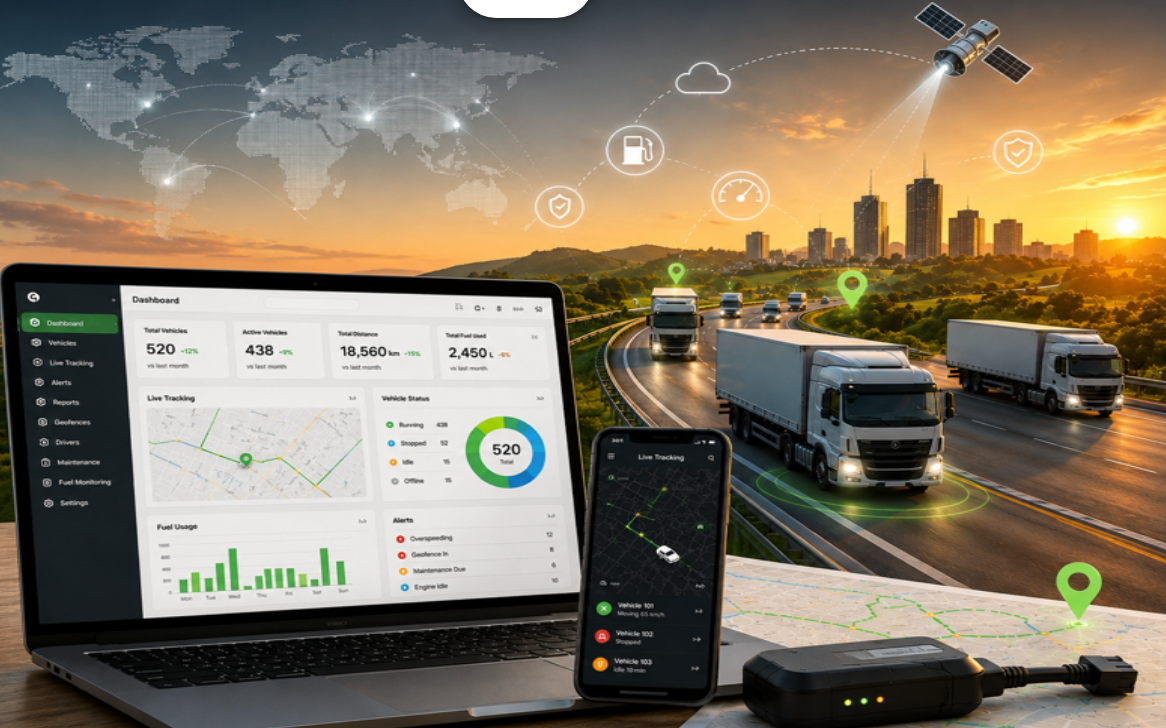
Fleet monitoring and fleet tracking are often used interchangeably, but they serve different purposes. Fleet tracking focuses on a vehicle’s real-time location, routes, and movement, while fleet monitoring provides a broader view by analyzing vehicle health, driver behavior, fuel consumption, maintenance, and other operational metrics. Understanding this distinction is essential for businesses looking to invest in technology that aligns with their operational goals, whether that’s improving visibility, reducing costs, or optimizing overall fleet performance. The growing demand for these capabilities is reflected in the market, with the global connected fleet management market projected to grow from USD 36.1 billion in 2026 to USD 69.8 billion by 2031, driven by increasing adoption of telematics, IoT, and advanced analytics.
Modern fleet monitoring software combines tracking data with operational insights, giving fleet managers a complete picture of vehicle performance and business efficiency. Rather than choosing one capability over the other, organizations achieve the best results by using fleet tracking and fleet monitoring together. This integrated approach enables faster decision-making, proactive maintenance, improved driver safety, and more efficient resource utilization, ultimately leading to lower operating costs and better service quality.
What Is the Difference Between Fleet Tracking and Fleet Monitoring?
Although the terms fleet tracking and fleet monitoring are often used interchangeably, they refer to different capabilities that serve distinct business objectives. Fleet tracking is primarily concerned with knowing where vehicles are, while fleet monitoring focuses on how vehicles, drivers, and the entire fleet are performing. Most modern fleet management solutions combine both functions, but understanding the difference helps businesses select the right technology and maximize its value.
Fleet tracking uses GPS technology and telematics devices to provide real-time visibility into vehicle locations, routes, travel history, speed, and estimated arrival times. Its primary purpose is to help dispatchers and fleet managers monitor vehicle movement, optimize routes, improve delivery accuracy, and respond quickly to unexpected events such as traffic congestion or route deviations. Tracking is particularly valuable for businesses that rely on timely deliveries, field service operations, or transportation logistics where location visibility is essential.
Fleet monitoring builds on tracking capabilities by collecting and analyzing a much broader range of operational data. In addition to location information, it provides insights into vehicle health, engine diagnostics, fuel consumption, maintenance status, idle time, driver behavior, and overall fleet performance. Instead of simply showing where a vehicle is, monitoring helps explain how efficiently it is operating and identifies opportunities to reduce costs, improve safety, and prevent downtime.
The difference becomes even more apparent when looking at the type of decisions each capability supports. Fleet tracking answers operational questions such as:
- Where is each vehicle right now?
- Which route is the driver taking?
- Has the vehicle reached its destination?
- Are there unexpected delays or route deviations?
Fleet monitoring, on the other hand, provides answers to broader business questions, including:
- Is the vehicle operating efficiently?
- Is excessive idling increasing fuel costs?
- Does the vehicle require preventive maintenance?
- Are drivers following safe driving practices?
- Which assets are underperforming and why?
While each capability provides value independently, businesses achieve the greatest benefits when they are used together. GPS tracking provides the visibility needed to manage day-to-day operations, while fleet monitoring transforms operational data into actionable insights that support strategic decision-making. For example, a logistics company can track delivery vehicles in real time while simultaneously monitoring fuel efficiency, engine diagnostics, and driver behavior to identify cost-saving opportunities and reduce unplanned maintenance.
When Does Your Business Need Fleet Tracking, Fleet Monitoring, or Both?
The right solution depends on your fleet’s size, operational complexity, and business priorities. While fleet tracking is ideal for businesses that need real-time location visibility, fleet monitoring is better suited for organizations looking to optimize vehicle performance, reduce costs, and improve operational efficiency. For many companies, combining both capabilities provides the most complete picture of fleet operations.
Fleet tracking is the best fit if your primary goals are:
- Monitoring vehicle locations in real time
- Optimizing routes and dispatching
- Improving delivery accuracy and estimated arrival times
- Recovering stolen vehicles or responding quickly to unexpected events
Fleet monitoring becomes more valuable when you need to:
- Monitor vehicle health and maintenance status
- Track fuel consumption and reduce operating costs
- Analyze driver behavior to improve safety
- Measure fleet performance through reports and analytics
- Support compliance with industry regulations
When evaluating a solution, consider factors such as fleet size, daily operations, compliance requirements, growth plans, and reporting needs. Smaller fleets may only require GPS tracking, while larger or more complex operations typically benefit from advanced monitoring capabilities that provide deeper operational insights.
Many modern fleet management platforms combine tracking, monitoring, reporting, and analytics into a single system. This integrated approach eliminates data silos, provides a unified view of fleet operations, and enables businesses to make faster, data-driven decisions. Instead of choosing between tracking and monitoring, organizations can leverage both to improve visibility, increase efficiency, reduce costs, and maximize fleet performance.
How Can the Right Solution Improve Fleet Performance?
Choosing the right fleet management solution goes beyond adding GPS tracking or monitoring individual vehicles. A platform that combines both capabilities gives fleet managers a complete view of operations, enabling faster decisions, higher efficiency, lower operating costs, and improved driver safety. With access to real-time location data and operational insights, businesses can optimize routes, reduce fuel consumption, prevent unexpected breakdowns, and respond proactively to potential issues before they impact service.
To support long-term growth, fleet management software should also be scalable and customizable. As fleet operations evolve, the platform should integrate seamlessly with GPS devices, telematics systems, ERP software, maintenance platforms, and other business applications. This creates a centralized ecosystem where data flows automatically between systems, eliminating manual work and providing accurate, real-time insights across the organization.
COAX Software specializes in custom fleet management software development, building tailored solutions that address the unique needs of transportation and logistics businesses. By combining real-time tracking, advanced fleet monitoring, analytics, and workflow automation into a unified platform, COAX Software enables organizations to streamline operations, improve fleet visibility, automate manual processes, and scale their technology as their business grows.
Choose the Right Technology for a Smarter Fleet
Fleet tracking and fleet monitoring are not competing technologies—they are complementary capabilities that work best together. While tracking provides real-time visibility into vehicle locations and routes, monitoring delivers the operational insights needed to improve efficiency, reduce costs, enhance safety, and maximize asset performance. Together, they give businesses a complete understanding of their fleet and the information needed to make smarter, data-driven decisions.
As fleet operations become more complex, investing in the right solution is essential for long-term success. By evaluating your business goals, operational requirements, and future growth plans, you can choose a platform that combines visibility, analytics, and automation to optimize fleet performance and support sustainable business growth.